

Where Are the Sidewalk Plows?
It’s been ten days since Toronto got walloped with an historic snowfall.
While it wasn’t enough to warrant calling in the army, Mayor Chow did ask Premier Doug Ford to lend the City some snow-clearing resources.
“I said, ‘Hey, you signed a contract that will shovel snow and remove snow,” the Mayor told reporters on Monday. “In 2021, the city wasn’t as smart … Can you give us a hand?’ And they said yes.”
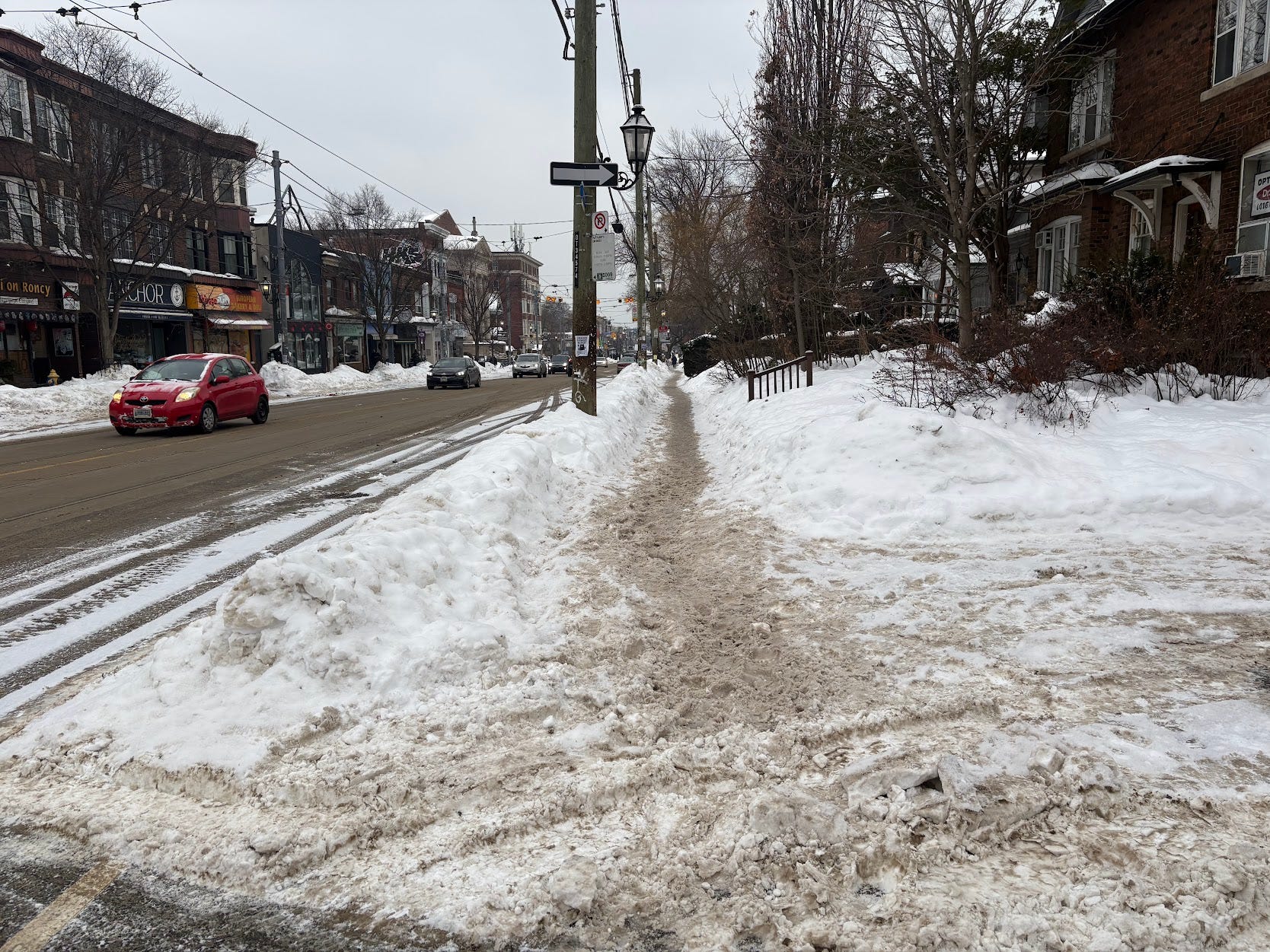
The Mayor went on to say that this would allow the City’s snow-clearing contractors to focus on sidewalks, many of which had not been cleared at all, or had been rendered impassable by windrows from street plows.
That was Monday.
Since then, we’ve received a total of 2 cm of snow, and many sidewalks — including parts of the Roncy strip — are difficult or unusable to anyone with mobility issues or strollers.
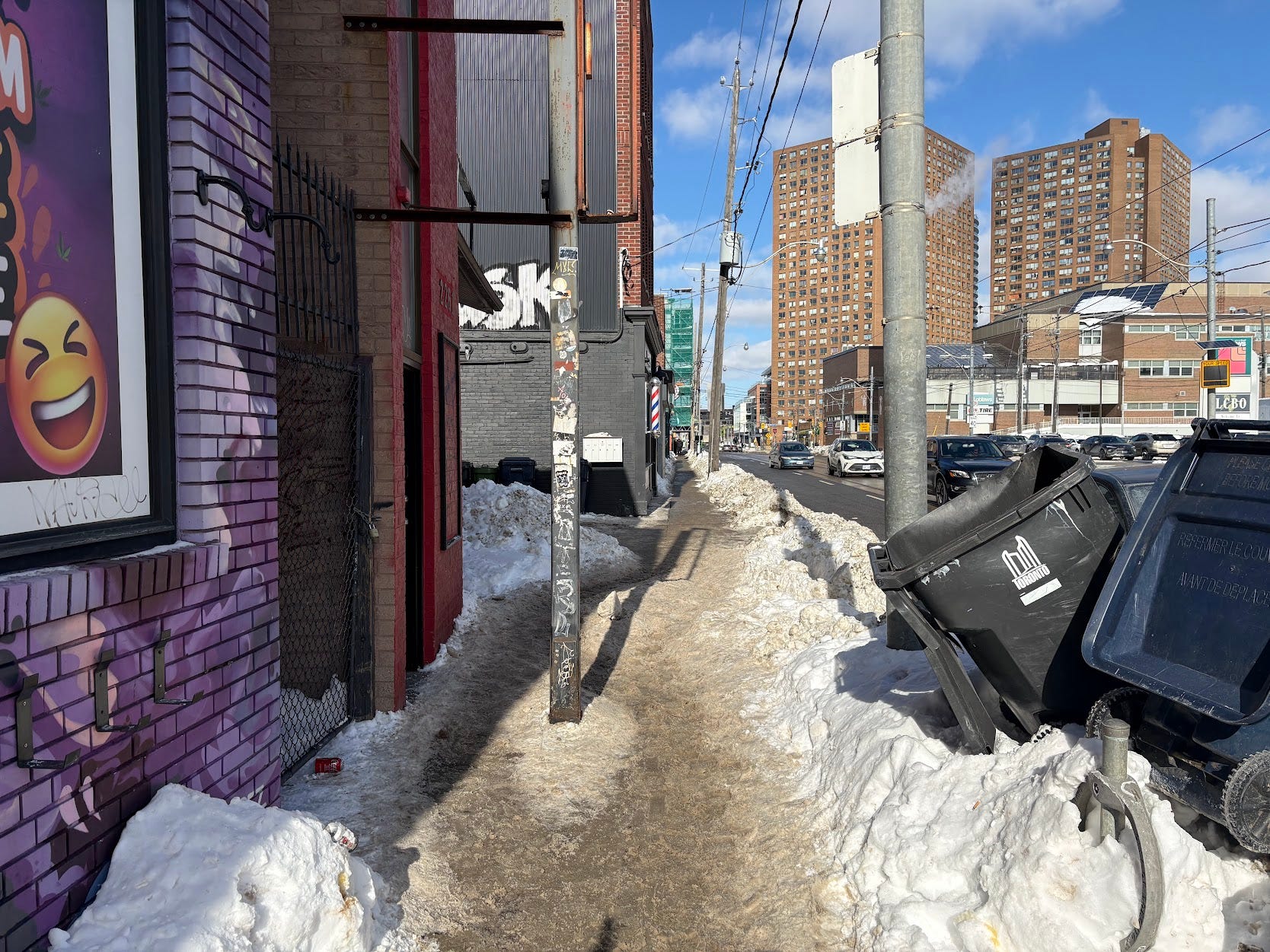
So where are the plows?
The City recently launched PlowTO, which allows you to see where the plows, which are equipped with GPS, have recently been. The screenshot below illustrates the situation on the morning of Feb. 2.
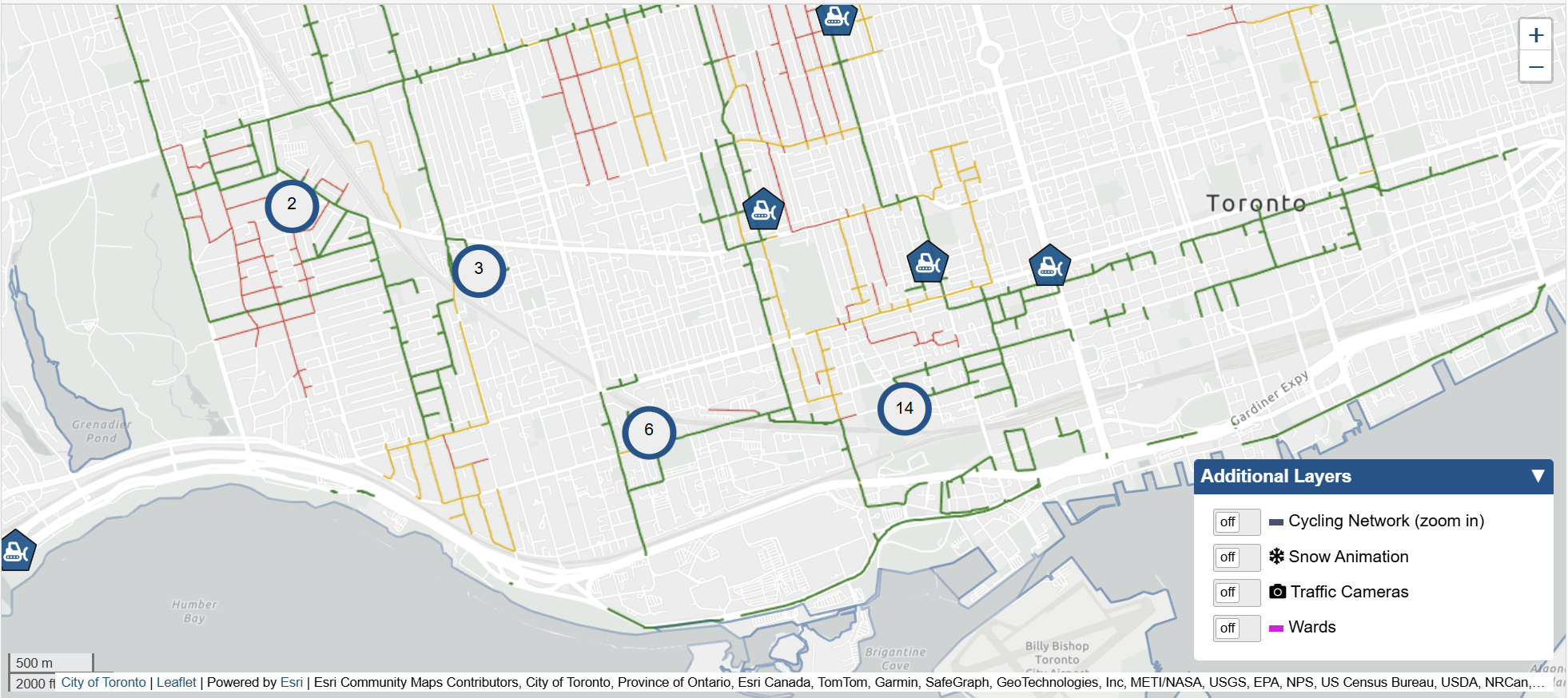
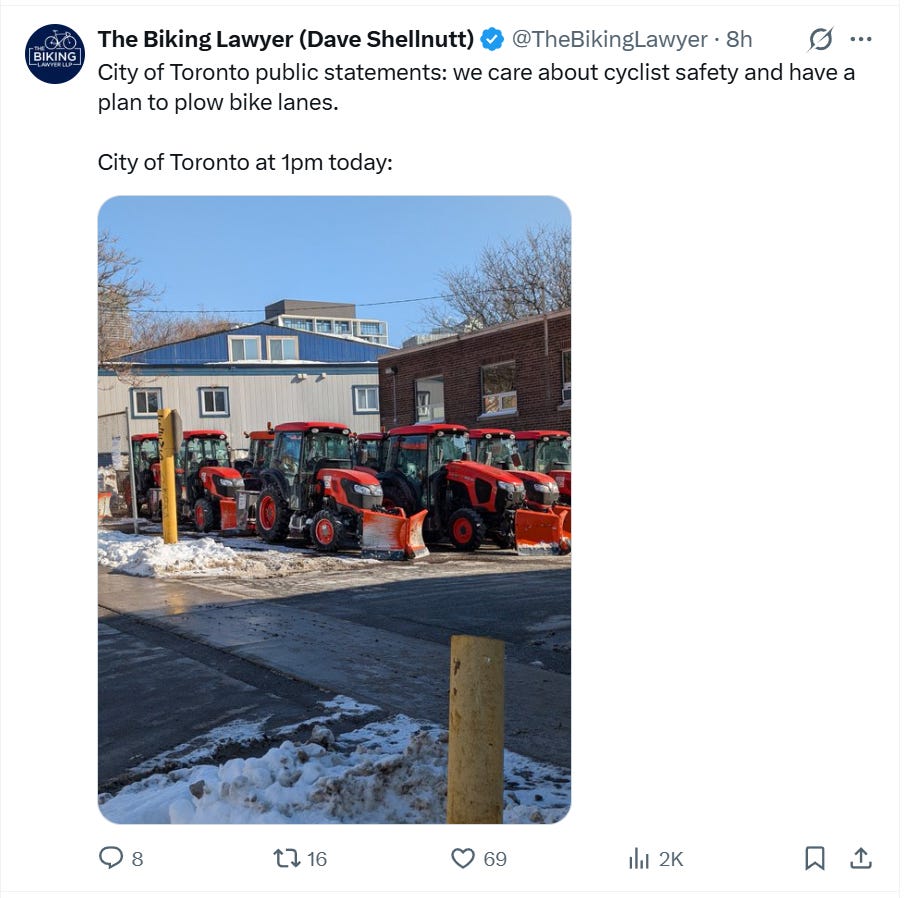
According the the website, there were two sidewalk plows in the Roncy area, three in Brockton and six in Liberty Village. Look a little further to the east, and there are 16 sidewalk plows all clustered together at Wellington Street yard, where snow removal equipment is stored.
The PlowTO website plainly states that Toronto is still under a “Major Snowstorm Condition and Significant Weather Event.” So why would 16 plows be sitting idle at Wellington Street yard while the city struggles to dig themselves out?
I asked the City on Monday exactly that.
According to Laura McQuillan, Senior Communications Advisor with the City of Toronto, the PlowTO map shows the most recent recorded locations of equipment.
“Equipment shown clustered in one area may be doing spot treatment where needed,” she said, in an email. “Some sidewalk plows are assisting with snow removal by pushing snow into piles for dump trucks to take away, which may explain why they remain in a similar location on the map for an extended period. Additionally, sidewalk plowing during the daytime can be challenging due to pedestrian traffic and safety considerations. As a result, a more limited number of sidewalk plows typically operate during the day, with additional equipment deployed overnight when sidewalks are less busy and crews can work more efficiently.”
McQuillan added that crews are also responsible for restoring accessibility at intersections and crossings, and that “311 service requests help crews identify where follow‑up work is most urgently needed.”
Meanwhile, the situation is even more dire for Toronto’s cyclists. Bike lanes have clearly been deemed a non-priority, as illustrated by the state of the Bloor bike lane below.
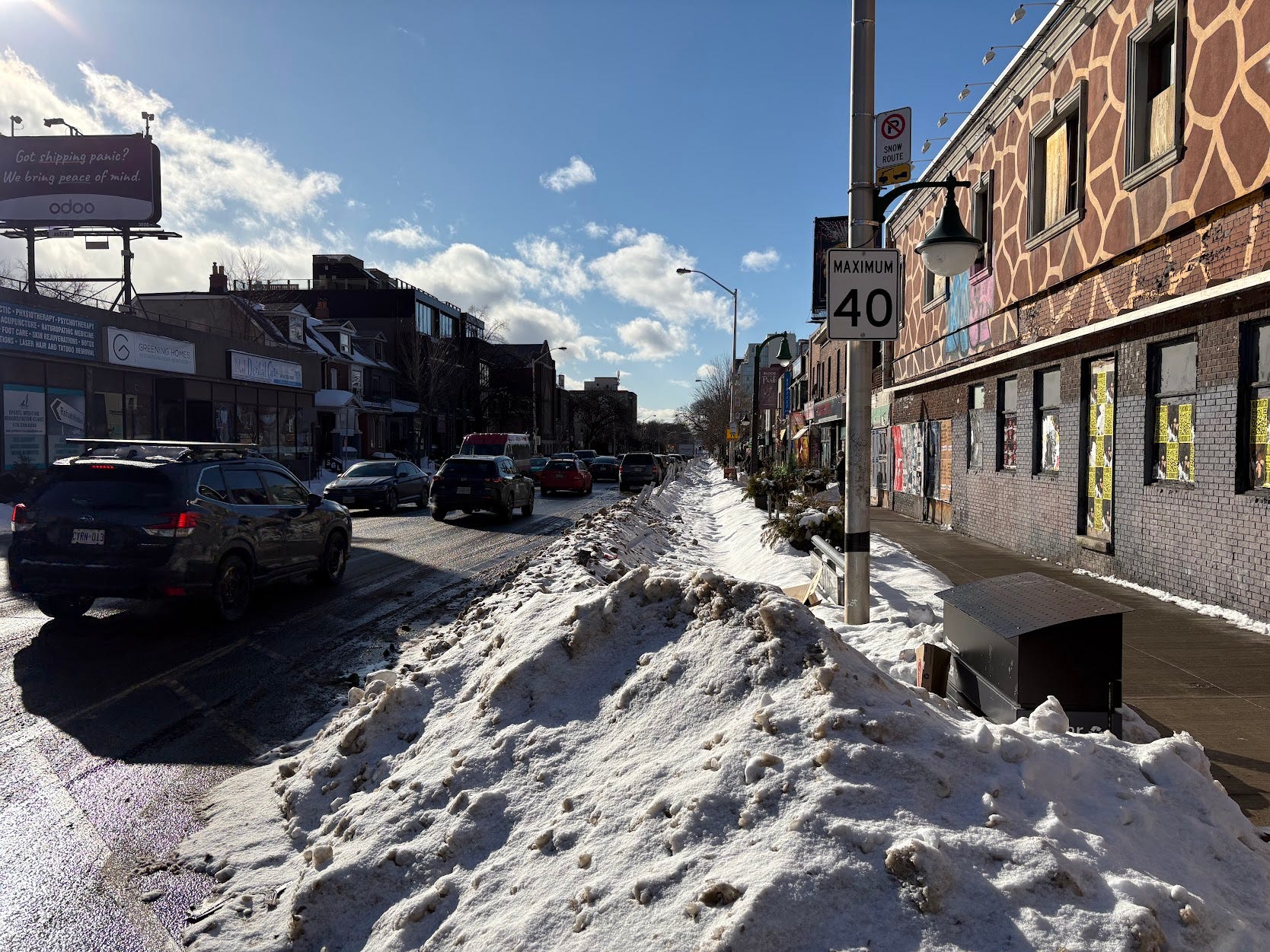
Cyclists have become increasingly vocal on social media at the lack of clear bike lanes, and PlowTO data confirms that very little of Toronto’s cycling infrastructure has been plowed.
At a news conference last Wednesday, Mayor Chow was adamant that sidewalks were a priority, and that city inspectors were patrolling the city to make sure contractors were “doing the right kind of work.”
“I want to be clear: sidewalk plowing is ongoing and we are not stopping,” she said.
However, the city is still receiving around 3,000 to 4,000 calls to 311 daily, with the number one request being about impassable sidewalks.
It’s frustrating! I’m having to carry my toddler to and from daycare because some of the sidewalks cannot be navigated with a stroller. And I’m lucky I’m physically capable to do so because not everyone has the option to just wade through the snow.